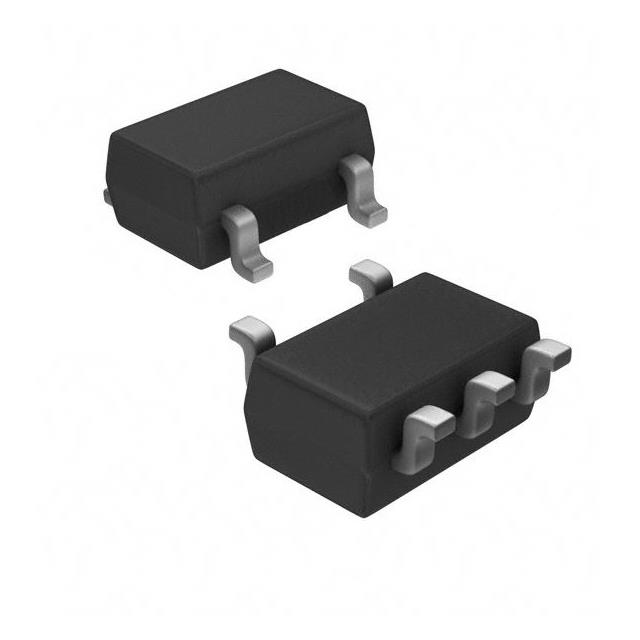
Key Specs
| Spec | Value | Condition | Source |
|---|---|---|---|
| Control Features | Enable | Digi-Key | |
| Current Quiescent IQ | 850 µA | Digi-Key | |
| Input Voltage (Max) | 15V | Digi-Key | |
| Mounting Type | Surface Mount | Digi-Key | |
| Number Of Regulators | 1 | Digi-Key | |
| Operating Temperature Range | -40°C ~ 85°C | Digi-Key | |
| Output Configuration | Positive | Digi-Key | |
| Output Current (Max) | 200mA | Digi-Key | |
| Output Type | Fixed | Digi-Key | |
| Output Voltage (Max) | - | Digi-Key | |
| Output Voltage (Min) | 3.3V | Digi-Key | |
| Package Case | SC-74A, SOT-753 | Digi-Key | |
| Protection Features | Over Current, Over Temperature | Digi-Key | |
| Psrr | 70dB (1kHz) | Digi-Key | |
| Supplier Device Package | SMV | Digi-Key | |
| Voltage Dropout (Max) | 0.2V @ 50mA | Digi-Key |
When To Use
Use the TAR5SB33(TE85L,F) in low-power portable devices requiring a stable 3.3V fixed output voltage with a maximum output current of 200mA. Its low dropout voltage of 0.2V at 50mA and low quiescent current of 850 µA make it suitable for battery-powered applications such as handheld instruments and sensor modules. The device’s wide input voltage range up to 15V and overcurrent and overtemperature protection features suit compact surface-mount designs needing reliable voltage regulation within the -40°C to 85°C operating range.
When Not To Use
Do not use the TAR5SB33(TE85L,F) in applications requiring output currents above 200mA or output voltages other than the fixed 3.3V. For high current loads, consider a regulator with a higher maximum output current rating. Avoid using this device in environments exceeding the -40°C to 85°C temperature range or where adjustable output voltage is required, as this device only provides a fixed output voltage.
Application Notes
The input pin is the switching node and requires the smallest possible loop area to minimize noise and improve stability. The enable pin is noise-sensitive and should be driven with a clean logic signal to avoid unintended shutdowns. Due to the low output current (200mA max) and low dropout voltage, a heatsink is generally not required under typical operating conditions. However, ensure adequate PCB copper area for heat dissipation when operating near maximum load and high ambient temperature.
Gotchas
-
Connecting the input voltage close to or below the output voltage plus dropout voltage (less than approximately 3.5V) causes the regulator to drop out of regulation, resulting in a lower-than-expected output voltage. To avoid this, ensure the input voltage remains at least 0.2V above the output voltage at the expected load current.
-
Driving the enable pin with a noisy or floating signal may cause unintended regulator shutdown or oscillation. To fix this, tie the enable pin to a stable logic level or use a pull-up resistor to ensure the device remains enabled during operation.