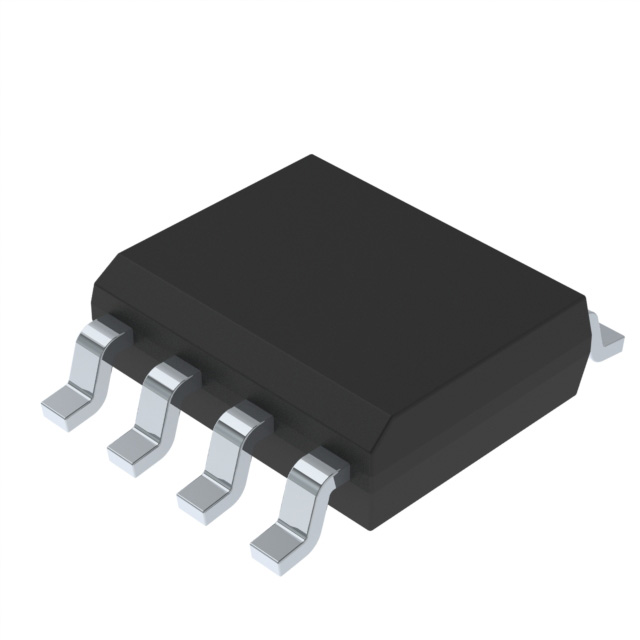
STGAP2SICSANCTR vs 1ED21471S65FXUMA1: Component Comparison for High-Side Gate Drivers
Quick verdict
For high-voltage isolated gate driving with strict galvanic isolation and automotive qualification, the STGAP2SICSANCTR is the better choice due to its 4.8 kV galvanic isolation rating and AEC-Q100 qualification. Conversely, for high-side gate driving of IGBT or SiC MOSFETs with integrated bootstrap supply, fast switching, and advanced protection features, especially in industrial or less isolation-critical applications, Infineon’s 1ED21471S65FXUMA1 offers more comprehensive functionality and simpler power stage integration.
Spec comparison table
| Spec | STGAP2SICSANCTR | 1ED21471S65FXUMA1 | Notes |
|---|---|---|---|
| Number of channels | 1 | 1 | Equal |
| Technology | Capacitive Coupling | HVIC with bootstrap supply | Capacitive coupling provides galvanic isolation; HVIC relies on bootstrap power |
| Galvanic isolation voltage | 4.8 kV galvanic isolation | None specified | ST part provides strong galvanic isolation; Infineon relies on bootstrap, no isolation |
| Voltage isolation (Vrms) | 2830 Vrms | N/A | Only ST provides a clear isolation rating |
| Voltage rating (max operating) | ±40 V | 650 V offset supply | Infineon supports higher offset voltage (±650 V vs ±40 V) |
| Gate driver voltage max | Up to 26 V | 25 V | Comparable driver voltage capability |
| Output peak current (source/sink) | 4 A / 4 A @ 25°C | 4 A / 4 A (typical) | Equal drive strength |
| Output current typical | 4 A | 4 A | Equal |
| Output current max | 500 mA (continuous) | Not explicitly specified | ST datasheet lists 500 mA max continuous current; Infineon does not specify continuous max |
| Input logic voltage | 3.1 V to 5.25 V | 2.4 V (logic 1 min) to 6.5 V max | Infineon supports wider logic input voltage range |
| Input bias current (typical) | 50 µA | Not specified | ST value provided; Infineon data missing |
| Common mode transient immunity | 100 V/ns | 100 V (transient immunity) | Both rated for similar transient immunity; ST specifies 100 V/ns CM transient immunity |
| Propagation delay (typical) | 45 ns | 55 ns (turn on/off typical) | ST faster by ~10 ns |
| Rise/fall time (typical) | 30 ns / 30 ns | 12 ns / 12 ns | Infineon faster switching edges, better for high-frequency applications |
| Supply voltage | 3.1 V to 5.25 V | 10 V to 22 V | ST logic supply lower voltage; Infineon requires higher voltage supply (bootstrap) |
| Quiescent supply current (typical) | 1.3 - 1.9 mA | 350 µA | Infineon draws significantly less quiescent current |
| Standby quiescent supply current | 400 - 700 µA | N/A | ST provides standby current data; Infineon does not specify |
| Operating temperature range | -40 °C to +125 °C | -40 °C to +125 °C | Equal |
| Junction temperature max | +150 °C | +150 °C | Equal |
| Package type | 8-SOIC (SO-8) | PG-DSO-8 | Both 8-pin SOIC variants, but different package codes |
| Package dimensions (typical width) | 3.9 mm | 3.9 mm | Same width |
| Thermal resistance junction-to-ambient (max) | 123 °C/W | 200 °C/W | ST has better thermal dissipation capability |
| Clamp current (typical) | 100 mA clamp current typical | Not specified | ST includes clamp current specs for output protection |
| Clamp voltage threshold (typical) | 2 V | Not specified | ST specifies clamp voltage threshold |
| Undervoltage lockout (UVLO) threshold | 13.8 V min turn-off, 14.5 V min turn-on | 6.2 V min turn-off, 6.8 V min turn-on | Infineon UVLO thresholds lower, suitable for bootstrap operation |
| Maximum switching frequency | 1 MHz max | Not specified | ST specifies max switching frequency; Infineon does not |
| Human Body Model ESD rating | 2 kV | 2 kV | Equal |
| Charged Device Model ESD rating | Not specified | 1 kV (Class C3) | ST data missing; Infineon specifies CDM rating |
| Overcurrent protection | Not specified | Yes, integrated de-sat detection | Infineon integrates OCP with desaturation detection |
| Fault clear time | Not specified | < 100 ns (typical) | Infineon provides fast fault clearing |
| Input to output operative voltage | ±1200 V | ±650 V offset supply | ST supports higher isolation-related voltage; Infineon supports higher offset voltages |
| Mounting type | Surface Mount | Surface Mount | Equal |
Design trade-offs
The STGAP2SICSANCTR’s capacitive coupling isolation and 4.8 kV galvanic isolation rating make it ideal for applications requiring robust physical isolation between control and power sections, such as automotive or industrial systems with safety requirements. This strict isolation simplifies layout constraints for high-voltage systems and reduces the need for additional isolation components. However, this comes at the cost of a limited operating voltage range (±40 V) on the driver side and higher quiescent current (~1.3–1.9 mA typical), which impacts power consumption in standby or low-load conditions.
In contrast, the 1ED21471S65FXUMA1 is a bootstrap-powered high-side driver targeting IGBT and SiC MOSFET applications up to 650 V offset voltage, making it well suited for high-voltage inverter topologies where isolated power supplies are not required or are provided separately. Its significantly lower quiescent current (~350 µA typical) improves efficiency in systems with frequent standby or low switching activity. The Infineon’s faster rise/fall times (12 ns vs 30 ns) enable better switching efficiency and reduced losses, especially at higher switching frequencies, but layout must consider bootstrap capacitor design and supply voltage constraints (10–22 V).
Thermally, the ST device offers significantly lower junction-to-ambient thermal resistance (123 °C/W max vs 200 °C/W for Infineon), indicating better heat dissipation capability in similar PCB environments. This advantage can be critical for designs pushing the 4 A peak current limits or operating in harsh environments.
The ST device’s input logic voltage range (3.1–5.25 V) is narrower compared to the Infineon’s wider logic input range (minimum logic 1 at 2.4 V, max 6.5 V), which can simplify interface compatibility with 3.3 V or 5 V MCUs but may limit flexibility in mixed-voltage systems.
Infineon’s inclusion of integrated overcurrent protection with desaturation detection and fast fault clearing (<100 ns typical) provides a layer of system safety that must be added externally in ST’s solution. This makes the 1ED21471S65FXUMA1 better suited for critical power stages requiring real-time fault response.
From a layout perspective, ST’s capacitive isolation layer imposes a minimum creepage and clearance, which may complicate PCB routing and increase board size, but ensures galvanic isolation without extra components. Infineon’s bootstrap approach simplifies PCB isolation requirements but demands careful bootstrap capacitor selection and can introduce complexity in UVLO and supply sequencing.
Cost-wise, ST’s automotive-qualified AEC-Q100 part may carry a premium compared to the industrial-grade Infineon driver, but provides peace of mind for automotive and safety-critical applications.
Use-case fit
Choose STGAP2SICSANCTR when…
- Your design requires galvanic isolation of at least 4.8 kV RMS, such as in automotive or industrial safety-critical systems.
- You need an AEC-Q100 qualified driver with proven automotive-grade reliability.
- The application operates with logic supply voltages between 3.1 and 5.25 V and demands tight isolation for high-voltage power stages.
- The switching frequency is up to 1 MHz with moderate switching speed requirements.
- Thermal dissipation is a concern and you prefer a device with lower thermal resistance junction-to-ambient.
Choose 1ED21471S65FXUMA1 when…
- You are designing a high-side driver for IGBTs or SiC MOSFETs with high offset voltages up to 650 V, typical in industrial motor drives or inverters.