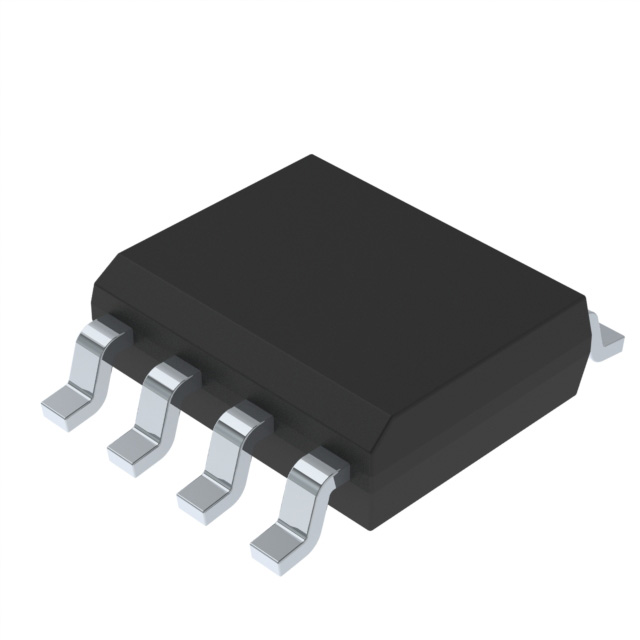
Comparison: STGAP2SICSANCTR vs 1ED2127S65FXUMA1 Gate Drivers
1. Quick verdict
For isolated high-voltage gate driving in automotive or industrial SiC MOSFET applications requiring robust galvanic isolation and AEC-Q100 qualification, the STGAP2SICSANCTR is the better choice due to its 4.8 kV isolation rating and automotive grade. For high-side gate driving of IGBTs or SiC MOSFETs in industrial settings where integrated bootstrap diode, overcurrent protection, and a higher voltage rating (up to 650 V) are needed, the 1ED2127S65FXUMA1 offers a more complete, fault-tolerant solution.
2. Spec comparison table
| Spec | STGAP2SICSANCTR | 1ED2127S65FXUMA1 | Notes |
|---|---|---|---|
| Technology | Capacitive Coupling | Non-Inverting High-Side Driver | Capacitive coupling provides galvanic isolation; 1ED2127 is a bootstrap high-side driver without galvanic isolation. |
| Number of channels | 1 | 1 | Equal. |
| Peak output current (source/sink) | 4 A / 4 A (typ) | 4 A / 4 A (typ) | Equal peak drive capability; both support 4 A sink/source. |
| Operating temperature range | -40 °C to +125 °C | -40 °C to +125 °C (TJ) | Comparable thermal range. |
| Absolute maximum isolation voltage | 4.8 kV galvanic isolation | None (650 V bootstrap voltage max) | ST device provides galvanic isolation rated at 4.8 kV, critical for safety-isolated designs; Infineon lacks galvanic isolation, suitable for bootstrap-driven high-side only. |
| Supply voltage range | 3.1 V to 5.25 V (logic supply) | 10 V to 22 V (driver supply) | ST uses low-voltage logic supply; Infineon requires higher supply voltage typical of bootstrap circuits. |
| Gate driving voltage max | Up to 26 V | 650 V high-side voltage rating (bootstrap) | Infineon supports high-side floating supply up to ~650 V offset; ST supports gate drive voltage up to 26 V referenced to isolated side. |
| Common mode transient immunity (CMTI) | 100 V/ns | 3–5 V/ns | ST device is significantly more robust to fast common-mode transients, important in SiC applications with high dV/dt switching. |
| Propagation delay (input to output) | Typical 45 ns | Typical < 100 ns (typ 80 ns) | ST offers lower propagation delay, beneficial for tight timing control. |
| Rise/fall time (typ) | 30 ns / 30 ns | 12 ns / 12 ns | Infineon provides faster switching edges, advantageous for efficiency and EMI in fast-switching applications. |
| Isolation resistance (typical) | > 10^9 Ω | Not applicable | ST provides insulation resistance data, relevant for isolated designs. |
| Package | SO-8 (8-SOIC) | PG-DSO-8 | Both 8-pin surface mount; different footprints. |
| Package dimensions (L x W) | 5 mm x 3.9 mm (typical) | 7.9–8.1 mm x 11.7–12.3 mm | ST is significantly smaller footprint, easier for compact PCBs. |
| Qualification | AEC-Q100 (Automotive) | Industrial qualification level | ST is automotive qualified; Infineon is industrial grade. |
| Human body model ESD rating | 2 kV | 2 kV | Equal ESD robustness. |
| Quiescent supply current (typ) | 1.3–1.9 mA operating | 270 µA (typ) | Infineon has lower quiescent current, beneficial for low-power standby modes. |
| Standby quiescent current | 400–700 µA | Not specified | ST provides standby current specs; Infineon does not detail standby mode. |
| Bypass capacitor recommended range | 100 nF to 10 µF (typ 1 µF) | Not specified | ST requires external bypass capacitor for stable operation; Infineon datasheet doesn’t specify. |
| Clamp current (typical) | 4 A to 5.5 A | Not specified | ST includes clamp current specs for SafeClp feature, helps protect gate oxide. |
| Under-voltage lockout (UVLO) thresholds | Turn-on: 14.5–16.4 V (operating) | ~7.2 V (MOSFET), 8.7–10 V (IGBT) | Infineon UVLO thresholds matched to bootstrap voltage; ST UVLO thresholds are higher, reflecting isolated driver supply. |
| Input logic thresholds | 0.58–0.7 x VDD (typ 2/3 VDD) | VIH=2.4 V, VIL=0.8 V (logic IO 0–5 V) | Both compatible with standard 3.3/5 V logic inputs; ST uses ratio of VDD, Infineon fixed thresholds. |
| Maximum switching frequency | Up to 1 MHz | Switching frequency 55–80 ns switching time (~12.5–18 MHz equivalent) | Infineon supports significantly higher switching frequencies due to faster rise/fall times. |
| Fault protection features | None explicitly stated | Built-in short-circuit protection (BSD), overcurrent protection (OCP), repetitive fuse elimination (RFE) | Infineon offers integrated fault protections, simplifying robust designs. |
| Isolation voltage test | 2830 Vrms | None | ST can be used in isolated topologies; Infineon cannot. |
| Maximum input voltage | 3.3 V / 5 V TTL/CMOS compatible | 650 V max floating input voltage | Infineon designed for high-side floating operation; ST for low-voltage isolated signals. |
| Storage temperature range | -50 °C to +150 °C | -55 °C to +150 °C | Comparable storage conditions. |
| Thermal resistance junction-to-ambient | 123 °C/W (max) | 200 °C/W (max) | ST has better thermal dissipation characteristics, aiding thermal management. |
3. Design trade-offs
The STGAP2SICSANCTR leverages capacitive coupling to deliver galvanic isolation rated at 4.8 kV, making it suitable for applications requiring reinforced isolation, such as automotive or industrial SiC MOSFET gate drive stages. This isolation reduces system-level complexity by eliminating the need for external isolators or transformers, but it comes with a relatively slower switching speed (30 ns rise/fall times) and a propagation delay of ~45 ns. The ST device’s higher CMTI rating (100 V/ns) means it can handle the high dV/dt transients typical of SiC switching without false triggering or damage, an important consideration in hard-switching topologies.
In contrast, the Infineon 1ED2127S65FXUMA1 is a bootstrap high-side driver designed for operation up to 650 V offset, typical for half-bridge or inverter applications with IGBTs or SiC MOSFETs. It lacks galvanic isolation but integrates overcurrent protection, short-circuit detection, and fault response features—reducing external component count and simplifying fault handling in firmware. Its faster switching edges (12 ns rise/fall) improve efficiency by reducing switching losses and EMI, and its switching frequency capability is significantly higher, enabling operation in high-frequency power converters. However, the lower CMTI rating (3–5 V/ns) means the PCB layout must be carefully designed to minimize transient coupling and noise.
Thermally, the ST device’s lower junction-to-ambient thermal resistance (123 °C/W vs. 200 °C/W) suggests it can dissipate heat more effectively for the same power loss, which can be critical in high-temperature environments or compact assemblies. However, the Infineon’s lower quiescent current (270 µA vs. ~1.3–1.9 mA operating current for ST) benefits applications where power consumption in idle or standby modes matters.
From a PCB layout standpoint, the STGAP2SICSANCTR’s smaller SO-8 package (typical 5 x 3.9 mm) is easier to accommodate in dense designs than the larger PG-DSO-8 footprint (about 8 x 12 mm) of the Infineon device. The ST’s isolation requires careful creepage and clearance spacing on the PCB but allows for simplified isolation barrier design. The Infineon’s non-isolated bootstrap approach requires bootstrap capacitor and diode but no isolation clearance, which might be preferred for cost-sensitive or simpler industrial designs.
Cost-wise, ST’s AEC-Q100 automotive qualification typically commands a price premium but ensures reliability in automotive or harsh industrial environments. Infineon’s industrial-grade device may be more cost-effective in less demanding applications. The integrated protections in the Infineon device can reduce BOM cost and design time, balancing the lack of isolation.
4. Use-case fit
Choose STGAP2SICSANCTR when…
- Designing isolated gate driver stages for SiC MOSFETs in automotive inverters, where 4.8 kV galvan